|
|

|
 |
| Other comments left for this publisher: |
|
|
|
|
|
|
|
I rave about this game every chance I get. I'm getting ready to run a game at a large event, as well as starting up my second campaign season. Starting out as an expert in your field, rather than a level 1 fighter with a crappy sword has a lot of appeal. The rules are easy for players to pick up and complex enough to give the Fixer (GM) many opportunities to challenge the players.
|
|
|
|
|
|
|
|
Introduction
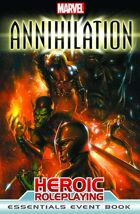
The Marvel Heroic Roleplaying Annihilation Premium Event Book is a full-featured Event spanning the various Annihiliation books. The Premium edition includes the Basic book's Operations Manual. The Event book also serves as a sourcebook for Marvel's cosmic empires and entities. The Hero Datafiles contain entries for Marvel's cosmic heroes and anti-heroes.
Operations Manual
The Operations Manual included in the Premium Event Book is the same as the Marvel Roleplaying Basic Game. It includes a Random Datafile Generator to create characters, but not the Example of Play download. (Note: OM18, The Doom Pool as Opposition, has an example of ship vs. ship combat, which may be useful as an example for starship vs. starship battles.)
Cosmic Scale
The Event book has a host of gamemaster preparation suggestions and optional rules to run a cosmic-scale event. I'm most impressed at how organically MHR adds cosmic comic book ideas to its narrative system. Starships are treated as characters, so easily fit into the game mechanics. Unlockables can be used, such as an unlocked ally Skrull infiltrating an Annihiliation Wave base, allowing the heroes in. To represent an impending threat, a die from the Doom Pool can step up as its act as the Timer complication. (And when it reaches d12, it doubles, returns to the Doom Pool, and can be spent as 2d12 to end the scene -- with the planet destroyed!) And the Doom Pool starts at four dice! Players receive cosmic assistance as well, with Cosmic Power Sets. Play a Shi'ar with the Nova Corps Centurian Power Set. Or recreate a cosmic Human Torch with the Herald of Galacticus Power Set.
Sourcebook
In addition to gamemaster preparation, the Event is presented as a Sourcebook and three Acts. The Sourcebook can be used outside of this Event, and summarizes the Kree Empire, Skrull Empire, Nova Corps, Shi'ar Empire, The Eternals, The Negative Zone (including Annihilus and The Annihilation Wave), Galactus, The Crunch (Kyln), and Other Cosmic Locations. Datafiles of important characters and archetypes are included, as well as milestones and unlockables for each faction. (The Hero Datafiles also include player characters who belong to these factions.) Additional cosmic Event Milestones are also included.
Acts and Actions
The Event is designed for four to six players, and contains about six month's worth of gaming. The Event consists of three Acts which follow the Annhiliation storyline. Each Act is broken down into Scenes: Buildup Scenes, Key Scenes, and Optional Scenes. Each Buildup Scene provides Hooks for different kinds of characters to encounter the Annihiliation Wave. Much like other Event books, the Event book provides key details for a Scene (eg. Watcher datafiles, and Scene seeds to further flesh out the Scene). Each Scene is only a few pages long, but the Event book provides plenty of gamemaster assistance to play a scene. (Besides, we've all read the comics, right?)
Hero Data Files
This section contains data files for the Fantastic Four (pre-Civil War) and a number of cosmic beings. While suitable for the various factions involved in this cosmic war, most cosmic beings in the Marvel Universe aren't terribly popular (eg. Firestorm, Beta Ray Bill), especially compared to their villainous counterparts. (Blastaar and Super Skrull are available, but who wouldn't want to play Annilihus? A pity that none of the acts are written with player characters as Annihilus or his minions!)
Conclustion
Want cosmic? Well, here it is. Even if you don't plan on soon running the Annhiliation Event, there's enough material here for some Fantastic Four stories, Kree and Skrull invasions, or an errant Galactus minion on Earth (again). New gamers may wish to start with Marvel Heroic Roleplaying Basic Game book, since the Annhiliation Event requires them to understand both the narrative Marvel Heroic Roleplaying System, as well as a cosmic-scale Event. A gamemaster with a mix of new and experienced MHR players can ease in the new players in the Kyrn Prison Buildup Scene with a fight with some prison mooks (using the Example of Play) and some starship combat (based on the previously mentioned OM18: The Doom Pool as Opposition).
|
|
|
|
|
|
|
|
A superhero that is fast, easy and focus on the important things:
First Role-Playing this game mechanist built for you to role play, you do not collect EXP by killing monsters lot, but by playing your character. Every action description of the player and build a pool of dice to try to accomplish this.
2nd Capture the feeling: when playing a superhero in the MARVEL universe, do you feel like a superhero in the MARVEL universe. This game can be played on so many different levels, even if the focus is on (The Fun) battle.
3rd Value for money: This PDF gives you a lot of money, and you only need this file to play in many adventures foreward.
Is warmly recomended!
|
|
|
|
|
|
|
|
This is the conclusion of a four-part series. Margaret writes quality work, just like she did for Dragonlance.
|
|
|
|
|
|
|
|
The story heats up in the third book of the story. Margaret writes quality work, just like she did with Tracy Hickman in Dragonlance.
|
|
|
|
|
|
|
|
This is the continuation of a great sic-fi series. She writes quality material, just like in Dragonlance.
|
|
|
|
|
|
|
|
This is a series I read in college that I really enjoyed. Anyone who has read any of her work with Dragonlance knows she can write quality material.
|
|
|
|
|
|
|
|
http://www.teilzeithelden.de
In der zweiten publizierten Großkampagne für Marvel Heroic Roleplaying (MHR) wird ein galaktischer Mongolensturm epischen Ausmaßes heraufbeschwört. Eine gewaltige Raumflotte voller insektoider Wesen dringt aus der „Negativen Zone“ in unser Universum ein und vernichtet dabei alle, die sich ihr entgegen stellen.
Erscheinungsbild
Das Event-Buch ist wie seine Vorgänger reich und farbig illustriert. Ich kann aber im Einzelnen bei manchen Bildern nicht erkennen, was sie genau darstellen sollen. Sie sind eher der Stimmung geschuldet und Ausschnitte größerer Szenen.
Negativ fällt auf, dass in der vorliegenden Version einige Seitenverweise immer noch nicht korrekt verweisen. Sie zeigten stattdessen auf Seite XX und waren auch nicht klickbar. Ansonsten wurde von klickbaren Querverweisen reichlich Gebrauch gemacht. Die für ein PDF wichtigen Bookmarks sind sehr übersichtlich gestaltet und erleichtern die Navigation.
Das Format verwendet vergleichsweise kleine Seiten. Dadurch sind aber auch ganze Seiten auf einem 7-Zoll-Tablet lesbar ohne scrollen zu müssen.
Inhalt
„Annihilation“ bezieht seinen Namen von Annihilus, einem Kriegsherrn aus der Negativen Zone. Durch die Expansion unseres Universums sieht er seine Heimatdimension bedroht. Weiterhin giert Annihilus danach, sich die kosmische Urkraft anzueignen. Als Antwort entfesselt er einen Vernichtungsfeldzug, der alles Vorherige in den Schatten stellt. Seine „Annihilation Wave“ ist eine Ansammlung mächtiger Raumflotten, beladen mit Dronenkriegern. Durch Lug und Trug hat er auch noch mächtige Verbündete gewonnen. Eine planetenvernichtende Megawaffe rundet das Ganze ab.
Vor dieser Kulisse spielen sich nun die Dramen ab, die die Spielercharaktere in die Handlung hineinziehen. So können wahre Helden oder selbstsüchtige Schurken gespielt werden. Planeten, Freunde, Verbündete und eventuell sogar Blutsverwandte gehen im Strudel der Ereignisse verloren. Schnell wird klar, dass auf die Invasion eine Antwort gefunden werden muss.
Auffällig ist, dass „Annihilation“ sehr actionlastig ist. Es ist eine sehr umfangreiche Kampagne, aber nahezu alle Szenen sind auf gewöhnliche Konflikte ausgelegt. Die andere große MHR-Kampagne „Civil War“ (Klick) hatte mehrere Szenen, die durch soziale Interaktion das Geschehen auflockerten. Dort mussten Helden vor dem Kongress aussagen, wurden von Angehörigen der Opfer einer Tragödie konfrontiert, oder mussten sich der öffentlichen Meinung stellen. Im Gegensatz dazu kommt „Annihilation“ fast als ein reines Gekloppe daher. Es werden viele Gegner, Schiffstypen und Überwesen eingeführt. Die wollen natürlich abgearbeitet werden.
Wie auch bei „Civil War“ werden die Ereignisse der Comic-Vorlage nicht einfach nachgespielt. Sie werden nicht mal zusammengefasst dargestellt. Mit Hinweisen aus der Bibliographie oder Wikipedia kann man das aber selbst nachholen. „Annihilation“ ist ein Baukasten, mit dem man selber eine Story schmieden kann. Das Buch beschäftigt sich vorrangig damit, die Bausteine genau zu beschreiben. Sie zu einer schlüssigen Story auszugestalten, obliegt dem Watcher und den Spielern.
Aufbau
84 Seiten umfasst das „Annihilation Source Book“. Es enthält die wichtigsten Rassen, Sternenreiche und Welten genauso wie viele der größten Helden, Schurken und gottgleichen Wesen dieses Universums und der anderen Dimensionen. Hier finden sich Galactus und seine Herolde, Annihilus und seine Horde, mehrere Sternenimperien und außergewöhnliche Orte in der Galaxis.
Die Kampagne selbst wird in drei Akten präsentiert, die 76 Seiten einnehmen. Das generelle Format der Basisregeln für Events wird hierbei beibehalten:
• „Event“: Ein komplettes Abenteuermodul („Mini-Event“) oder eine Kampagne
• „Act“: Eine narrative Einheit, die sich in mehrere Szenen gliedert
• „Scene“: Spielbare Szene, unterschieden nach „Action“ und „Transition“
◦ „Action Scene“: Durch einen Konflikt bestimmte Szene
◦ „Transition Scene“: Szenen, die zwischen den „Action Scenes“ überleiten
Am Kampagnenmodul fällt auf, dass die Abfolge der Szenen in einem Akt relativ locker ist. Es ist dem „Watcher“ (Spielleiter) überlassen, welche Höhepunkte er setzen will und in welcher Reihenfolge. Die einzelnen Szenen wurden so gestaltet, dass bestimmte Ergebnisse wahrscheinlich sind, die auch den Ereignissen aus den originalen Comics ähneln. Das Ganze ist aber eben keine auf Schienen festgefahrene Story. Viele Szenen enthalten alternative Enden und Hinweise, wie der Watcher auf abweichende Resultate reagieren kann. So kann ein frühzeitiger Erfolg gegen einen zentralen Gegner wie Annihilus selbst eine Verschiebung der Story auf andere Charaktere bewirken. Die Struktur der Kampagne würde es sicher auch erlauben, einen eigenen Handlungsstrang zu stricken. Genug Material an Szenen gibt es jedenfalls, um flexibel reagieren zu können.
Auch die einzelnen Szenen erinnern mehr an Plot-Versatzstücke. Für jede Szene werden mehrere sie definierende Elemente eingeführt. Es gibt Empfehlungen, welche Gegner man in der Szene einsetzt und wie man die Gesamtszene variieren könnte. Verschiedene mögliche Spielerideen werden angesprochen, aber auch taktische Varianten für den Einsatz der Gegner. Manche Szenen enthalten auch Tipps, wie man Schlüssel-Charaktere austauscht oder die Szene auf andere Welten verlegt. Man merkt schnell, dass es dem Watcher obliegt, das Gerüst mit Leben zu füllen.
60 Seiten entfallen auf doppelseitige Charakterbögen. Die erste Seite entfällt hierbei auf die spieltechnisch relevanten Werte, die zweite auf eine Charakterbeschreibung zum Einlesen. Ein Glossar der wichtigsten Begriffe, ein Index aller Charaktere und Einheiten und eine Bibliographie runden das Buch ab.
Regelerweiterungen
Im Marvel-Spielsystem werden die Stärken jeder Spielfigur oder Einheit durch Würfel ausgedrückt. Vom vierseitigen bis zum zwölfseitigen Würfel drücken sie verschiedene Stärkegrade aus, wobei ein W4 für einen Nachteil steht und W12 für „gottgleich“ (godlike). Die Spieler erstellen nun Würfelpools, die zur Narration der geplanten Handlung passen und sich der Stärken und Schwächen ihres Charakters bedienen.
Hierbei gibt es Würfel für …
• „Affiliation“ - Allein, mit Partner oder im Team.
• „Distinction“ - Eine Charakter- oder Wesensbeschreibung, die als Vor- oder Nachteil ausgespielt werden kann.
• „Power Set“ - Eine oder mehrere Mächte, die man einsetzen kann. Sind mehrere Power Sets vorhanden, können sie gleichzeitig eingesetzt werden.
• „Specialty“ - Fertigkeiten wie Kampf, Einschüchterung, Fahrzeugelenken usw.
• „Complication“ - Ein bleibender Nachteil, den man einem anderen zugefügt hat.
• „Asset“ oder „Ressource“ - Ein (evtl. bleibender) Vorteil, den man sich erkauft hat.
• „Stress“ - Schaden, den man einem Gegner bereits zugefügt hat.
• „Push Die“ oder „Stunt“ - Zusatzwürfel, die für diesen Pool gekauft wurden.
Würfel aus jeder dieser Kategorien dürfen in den Pool aufgenommen werden, falls vorhanden und zur Spielsituation passend. (Hier klicken für ein konkretes Beispiel.) Man bemerkt bereits die Komplexität des Systems, und eine weitere Detaillierung würden den Rahmen sprengen. In einem kleinen Event wie „Breakout“ aus dem Basisbuch oder einer Kampagne auf der Erde wie „Civil War“ sind Mächte mit der Ausprägung W12 eher selten, doch in Annihilation sind sie aufgrund des „kosmischen“ Rahmens viel häufiger anzutreffen.
Es wird sogar noch eins draufgesetzt: Die Basisregeln modellieren drei Varianten: Einzelcharaktere, Mobs und „große Bedrohungen“ (large scale threats). Manche der göttlichen und kosmischen Akteure sind als solche große Bedrohungen ausgelegt und verfügen für sich selbst schon mehrere W10 oder W12 als „Affiliation“. D.h., sie sind für sich genommen schon ein einziger grosser Würfelpool, der erst einmal dezimiert sein will. Von den vielen Spezialfähigkeiten sei hier darüber hinaus gar nicht die Rede...
Als spannungsgeladene Regelvariante erweist sich auch die „Timed Action“. Der Watcher kauft sich hierbei eine „Timer Complication“, die mit jeder Spielrunde anwächst. D.h., z.B. beginnt die Komplikation als W6, und wächst jede Runde um einen Würfelgrad (W8, W10, W12) an. Der Spielleiter kann damit z.B. die Aktionen der Spieler erschweren. Ist der Würfel auf W12 angewachsen, darf ihn der Spielleiter in der folgenden Runde verdoppeln und in seinen Würfelvorrat („doom pool“) mit aufnehmen. Er kann mit diesen zwei W12 sogar die Szene vorzeitig beenden. Die Spieler hingegen können gezielt gegen diesen Timer-Würfel agieren und ihn bei Erfolg vorrübergehend wieder senken. Eine Idee, die Spannung und Zeitdruck verspricht.
Das System bleibt sich von den Konzepten her völlig treu. Die neue „Timed Action“ scheint sich nahtlos in die bekannten Mechanismen einzureihen.
Preis-/Leistungsverhältnis
Besprochen wurde die „Essentials Edition“ (Klick), was bei MHR für ein Buch ohne Regelteil steht. Sie schlägt mit 23,99 USD zu Buche, was der Seitenzahl und dem Inhalt angemessen ist. Für 6 USD mehr kann man die „Premium Edition“ (Klick) erwerben. Sie liefert das „Operations Manual“ gleich mit (136 Seiten Differenz im Umfang).
Zum Vergleich: Für 10 USD erhält man aber auch „Marvel Heroic Roleplaying: Basic Game“ (Klick), das auf seinen 232 Seiten zusätzlich ein Mini-Event („Breakout“) enthält. „Breakout“ enthält eine umfangreiche Sammlung von vorgefertigten Heldencharakteren und Bösewichten, und ist sicher die 4 USD mehr für ein ganzes „Basic Game“ wert.
Insgesamt stimmt das Verhältnis von Preis und Leistung für das Produkt, und wird nur vom „Basic Game“ übertroffen.
Fazit
Am meisten werden sicherlich die Spielgruppen aus dem Band ziehen, die die Handlung selber treiben wollen und eigene Ideen einbringen. „Annihilation“ stellt dem Spielleiter viel Rohmaterial zur Verfügung, um eine große Bandbreite an Szenen abzudecken. Umgekehrt sind auch viele Szenen nicht vollständig ausgearbeitet. Eigenes Ausgestalten ist hier angesagt.
Für jemand, den die kosmischen Epen aus dem Hause Marvel faszinieren, ist „Annihilation“ ein Muss. Alle anderen sollten abwägen, wie groß der soziale Spielanteil sein sollte. „Civil War“ bietet sicherlich mehr Spielanteile, die über Gegnerverkloppen hinausgehen. „Annihilation“ hingegen bietet viele variantenreiche Konfrontationen. Grosse Reden sind dagegen eher nicht gefragt.
Der größte soziale Konflikt findet wahrscheinlich sowieso nicht im Spiel selbst statt: Leider kann immer nur ein Spieler den Silver Surfer spielen...
Bonus/Downloadcontent
Zu anderen Events wurde eine druckerfreundliche Variante der Charakterbögen angeboten. Die in Blautönen gehaltenen Heldenbögen würden sonst schnell so manche Tintenpatrone oder Tonerkartusche erschöpfen. Diese kleinen Extras lassen aber noch auf sich warten.
Unsere Bewertung
Erscheinungsbild 4/5 Ansprechend, gutes Design und Layout, reich illustriert.
Inhalt 4/5
Preis-/Leistungsverhältnis 4/5 Der Preis ist dem gelieferten Umfang angemessen.
Gesamt 4/5
|
|
|
|
|
|
|
|
I really like this book as an add-on for Marvel Heroic. If you're a hardcore fan of the Young Avengers or Runaways (like me!) you'll love it.
|
|
|
|
|
|
|
|
WHAT WORKS: This is maybe my favorite release for Marvel Heroic. Period. Soooo many options jammed into the book, capturing the epic scale of the Annihilation Event, and all in one book. As with Civil War, there is a roadmap, but no railroad tracks. You can blaze your own trail through Annihilation if you like. Also, Nova.
WHAT DOESN’T WORK: No Adam Warlock. We get the Fantastic Four, but no Adam Warlock. Sorry, I like Adam Warlock. And yeah, he wasn’t involved in Annihilation, but neither was Reed Richards. Also, we get a great picture of Nova and Annihilus fighting, but there’s an almost iconic Nova-Annihilus scene from the end of the series that wasn’t used. Yes, I’m nitpicking at this point. And yes, I will have a Baron Zemo-like reaction when Warlock shows up in a book.
CONCLUSION: Like I said, this may be my favorite release for Marvel Heroic. Heck, I bet I could buy the Premium version so I have the rules bundled in with this and be happy. If you hate Marvel Heroic, this isn’t going to sway you. If you thought it sounded alright, but wouldn’t touch Civil War with a ten-foot pole, might be time to jump in. If you’re already a fan…then you’ve probably purchased this already. I cannot wait to see the remaining books in the Cosmic line.
For my full review, please visit http://mostunreadblogever.blogspot.com/2013/03/tommys-take-on-annihilation-essentials.html
|
|
|
|
|
|
|
|
Follow the money - sound advice whether you're a vice or fraud cop, a tax man, an investigative reporter... or a Leverage crew!
This product contains a fascinating look at just some of the nefarious methods used by crooks - often the white-collar criminals found in board rooms and legal firms and financial houses - to salt away their ill-gotten gains where the taxman cannot get it and thieves (they hope) cannot break in and steal it. At least, not until a passing Crew does the honours.
Art fraud, art theft, bribery, creative accounting, credit card fraud and identity theft, embezzling, insider trading, insurance fraud, money laundering, Ponzi schemes and pyramids, stock fraud, tax evasion, unethical business practices... it's all here, in sufficient detail to inspire your plots but not, I'm glad to say, in quite enough detail to be a complete primer in how to pull it off yourself!
If you've thought that these sorts of white-collar crimes were a bit too cerebral for you and your Crew to handle convincingly, read this and think again. If you need even more inspiration, read John Grisham's The Firm! Or the newspapers... many of the examples given are real-world crimes, along with neat notes on how you might make use of the concepts, if not the crimes themselves, as you devise the next Job.
|
|
|
|
|
|
|
|
http://www.teilzeithelden.de
Es war irgendwann in den 80er Jahren, als ich das letzte Mal einen Marvel-Comic in der Hand hielt. Das war die Zeit, als Spider Man noch Die Spinne, Daredevil noch Der Dämon und Iron Man noch Der Eiserne hieß. Oder besser gesagt: Das war das vorletzte Mal, dass ich einen Marvel Comic las. Vor ein paar Jahren stolperte ich im Zuge der ganzen Marvel-Neuverfilumgen über Marvels Civil War Handlungsbogen. Begeistert von der Story kaufte ich mir die Civil War Bände nebst den in den diversen Hauptlinien erschienenen Comics. Ich war begeistert. Ich konnte mich zwar trotzdem nicht langfristig für Marvel begeistern, aber als Margaret Weis Production das „Marvel Heroic Roleplaying: Civil War Event Book“ heraus brachte, musste ich es einfach haben.
Worum geht es in dem Band? Die USA planen ein neues Gesetz, den „Superhuman Registration Act“ oder kurz SHRA. Wesen mit Superkräften sollen gezwungen werden, ihre Geheimidentitäten offen zulegen. Dies führt im Laufe der Kampagne zu einem Bürgerkrieg zwischen Befürwortern (angeführt von Iron Man) und Gegnern (angeführt von Captain America) des neuen Gesetzes.
Die Kampagne will die Ereignisse rund um den SHRA und den darauf folgenden Bürgerkrieg unter den Superhelden nacherzählen.
Bevor ich mit der Rezension beginne, möchte ich Leser beruhigen, die diese Kampagne gerne als „Nur Spieler“ erleben möchten. Meine Rezension enthält keine Spoiler. Dort wo ich Details des Quellenbandes erwähne, sind diese Informationen auch für Spieler offensichtlich.
Erscheinungsbild
In dieser Rezension behandle ich die Premium Edition „Marvel Heroic Roleplaying: Civil War Event Book Premium.“ Von Margaret Weis Production. Es enthält neben dem Event Civil War noch die Grundregeln für das Rollenspiel selbst. Das Event Book ohne den Regelteil gibt es separat, zu einem günstigeren Preis, zu kaufen. Ich beschränke mich auf das Event Book. Die Grundregeln selbst wurden bereits hier rezensiert. Wichtig ist, dass die Regeln hier in Teilbereichen klarifiziert wurden.
Das mir vorliegende PDF umfasst 368 Seiten und ist englischsprachig. Auf meinem Tablet wird die Schrift gut leserlich dargestellt. Das Layout ist recht verschwenderisch. Es bleibt am Rand häufig ein recht großer, freier, Streifen. Bei entsprechendem Layout hätte man hier deutlich an Seiten sparen können, was das PDF sicherlich günstiger gemacht hätte.
Die Illustrationen sind durchweg farbig. Ob sie direkt aus den Comics stammen oder eigens für das Rollenspiel gezeichnet wurden kann ich zwar nicht beurteilen, aber sie haben mich beim Lesen gut auf den Inhalt eingestimmt – sie sind ein echter Hingucker.
Das PDF selbst ist ordentlich verlinkt. Sowohl das Inhaltsverzeichnis, der Index als auch Verweise im Fließtext selbst führen zuverlässig zur verknüpften Seite. Die Seitenzählung selbst stört diesen positiven Eindruck. Die Seiten des PDFs sind nicht durchgängig nummeriert. Der Regelteil ist von OM01 bis OM135, der Kampagnenteil von CW01 bis CW226 nummeriert. Das erschwert die Navigation ungemein.
Inhalt
Eines vorneweg: Der Band eignet sich nicht dazu, ihn kurz vor der kommenden Spielsitzung einmal rasch durchzulesen und dann draufloszuspielen. Er erfordert einiges an Vorbereitungszeit durch den Spielleiter. Wissen um das Marvel-Universum wird vorausgesetzt. Es gibt zwar genügend Seiten im Netzt auf denen man sich ausgezeichnet informieren kann (Wikipedia ist dein Freund), aber ein völliger Neuling wird erst einmal hilflos vor den Texten stehen.
Die Kampagne ist in drei Akte unterteilt. Die einzelnen Akte beinhalten lose zusammenhängende Szenen, die kurz und prägnant Schlüsselereignisse der Kampagne beschreiben. Das bedeutet zwar, dass der Spielleiter auch hier viel Arbeit in die Kampagne investieren muss, aber letztendlich wird er durch seine Arbeit mit einer recht umfangreichen Sandbox belohnt.
Die Autoren gehen davon aus, dass die Kampagne genügend Spielmaterial enthält um ein halbes Jahr an ihr spielen zu können. Mein eigener Eindruck ist, dass die Kampagne ohne Probleme auch länger laufen kann, zumal nach deren Beendigung es noch genügend offene Handlungsstränge gibt, die es Wert sind weiter verfolgt zu werden.
Am Anfang des Textes werden diverse Sonderregeln wie z.B. Troupe Play und Hero vs. Hero erläutert, bzw. auf Probleme beim abhandeln solcher Situationen eingegangen. Hier findet man auch eine Übersicht über die diversen Organisationen und Einzelpersonen, die im Fortlauf der Kampagne von Bedeutung sein Können.
Wer sich noch nicht mit dem Marvel Heroic Roleplaying Game beschäftigt hat, wird sich eventuell darüber wundern, dass er ausschließlich vorgefertigte Charaktere spielen kann. Es gibt zwar auch Regeln um sich per Zufallstabellen einen eigenen Charakter zusammenzubauen, die Kampagne selbst geht aber davon aus, einen der bekannten Helden des Marvel Universums zu spielen. Mir persönlich gefällt das. Es mag ungewöhnlich sein, hört sich aber nach einer Menge Spass an. Zu diesem Zweck findet sich am Ende des Bandes noch eine lange Liste fertiger Charakterblätter aller relevanten Superhelden. Hier dürfte für jeden Geschmack etwas dabei sein.
Zuerst hatte ich die Befürchtung, dass die Nacherzählung des Civil Wars Spielern wenig Freiraum lässt um eigene Entscheidungen zu treffen und eigene Wege zu gehen. Meine Befürchtungen sah ich aber nur teilweise bestätigt. Natürlich gibt es festgesetzte Events. Der SHRA wird beschlossen werden. Aber auf welcher Seite werden die Spielercharaktere dem Bürgerkrieg beitreten? Oder versuchen sie neutral zu bleiben? Wie strikt wird das neue Gesetz sein? Wie denkt die Öffentlichkeit darüber? All das kann durch die Entscheidungen der Spieler beeinflusst werden und fließt letztendlich in das Ende der Kampagne mit ein. Gleich zum Beginn der Kampagne wird z.B. einem der Spielercharaktere die Möglichkeit geboten, den Hammer Thors aufzunehmen und so zum neuen Donnergott zu werden. Damit alles funktioniert, dürfen die einzelnen Szenen natürlich nicht zu detailliert beschrieben sein. Niemand kann vorher sagen in welcher Konstellation die Helden die Szene betreten. Welcher Seite gehören sie an? Wen haben sie bereits vorher getroffen? Mit wem sind sie befreundet, wen haben sie verärgert? Hier ist also wieder der Spielleiter gefragt, die zu spielenden Szenen entsprechend vorzubereiten, bzw. sie durch eigenes Material zu ergänzen.
Um das alles Spielbar zu halten, haben die Autoren ein paar neue Ideen entwickelt. Im Troupe Play z.B. suchen sich die Spieler mehr als einen Charakter heraus, den sie dann je nach Bedarf spielen können. Eventuell ist ein Charakter durch äußere Umstände blockiert? Eventuell passt gerade ein anderer Charakter besser ins Bild? Das besondere an dieser Art von Spiel ist, dass erworbene XP für alle gewählten Charaktere genutzt werden können.
Obwohl sich alles sehr stimmig und rund liest, hätte ich mir mehr Hintergrundinformationen gewünscht. Beim lesen des Materials blieb mir oft nur die Möglichkeit mir im Netzt genauere Informationen zu suchen. Beispielsweise wird im Text ein wichtiges Ereignis erwähnt: Die Stamford Tragödie. Obwohl dieses Ereignis eines der Schlüsselszenen mit dramatischen Konsequenzen ist, erfährt man nur am Rande, dass eine Gruppe Superhelden mit dem Namen New Warriors und ein Schurke mit dem Namen Nitro daran beteiligt waren, sowie die Anzahl der unbeteiligten Opfer. Das ist insbesondere schade, weil davon ausgegangen wird, dass die Charaktere z.B. auf der Straße von Passanten darauf angesprochen werden.
Dieser Mangel an Hintergrundinformationen setzt sich leider durch die ansonsten hervorragend aufbereitete Kampagne fort.
Die einzelnen selbst Szenen sind hervorragend beschrieben. Der Spielleiter erhält hier genügend Informationen um die Szene spannend zu gestalten. Die Autoren gehen gerade bei wichtigen Schlüsselszene sehr gut auf Alternativen und deren Konsequenzen im Fortlauf der Kampagne ein. Schon beim lesen, ohne das Marvel-Universum genauer zu kennen, fielen mir diverse Anknüpfpunkte und coole Actionszenen ein.
Preis-/Leistungsverhältnis
Hier weiß ich nicht recht wie ich das mir vorliegende Material beurteilen soll. Auf der einen Seite überzeugt die Qualität des PDFs. Auf der anderen Seite aber bleibt wegen des allzu großzügigen Layouts ein leicht schaler Beigeschmack. Ist das PDF wirklich USD 29,90, bzw. das Hardcover USD 49,99 wert? Für mich ist das so ein Grenzfall. Ich würde sagen: „Gerade mal so ok.“ Wer die Marvels Grundregeln bereits sein Eigen nennt, kann auf den Erwerb der Premium-Ausgabe verzichten und nur den Kampagnenband „Civil War Essentials“ erwerben. Das würde in der Hardcoverausgabe mit USD 39,99 zu Buche schlagen ( USD 23,99 für das PDF). Wirklich günstig ist das gemessen an der Textmenge nicht.
Fazit
Mich hat der Band durchaus begeistern können. Es gibt zwar in der abschließenden Beurteilung Abzüge in der B-Note, wegen des nicht ganz optimalen Preis-/Leistungsverhältnisses und manch fehlender Hintergrundinformation, aber die Kampagne sieht nach jede Menge lang anhaltendem Spielspasses aus.
Mir hat das Lesen des Bandes sehr viel Freude bereitet und mir Lust auf Mehr gemacht. Was will man mehr erwarten?
Unsere Bewertung
Erscheinungsbild 4/5 Viele farbige Illustrationen, gute Verlinkung des PDFs. Abzüge wegen der nicht durchgehenden Nummerierung der Seiten.
Inhalt 3/5 Gut geschrieben, viele nützliche Tipps für den Spielleiter. Leider mangelhafte Hintergrundinformationen. Viel Arbeit für den Spielleiter.
Preis-/Leistungsverhältnis 4/5 Viel Material für eine lange Spielzeit. Abzüge wegen des verschwenderischen Layouts.
Gesamt 3.6/5 Ich schwanke hier zwischen drei und vier Sternen. Letztendlich würden es vier Sterne werden, weil das einzige echte Manko, die fehlenden Hintergrundinformationen, durch Eigenrecherche im Netz leicht ausgeglichen werden kann.
|
|
|
|
|
|
|
|
This gives a very nice summary of the event, and great writeups for the cosmic genre. As somebody who hasn't read the comics I've gotten a good feel for what's going on.
There is one problem: this book is chock full of "See page ANXX" errors - there's at least one every couple of pages!
|
|
|
|
|
|
Creator Reply: |
|
ANXX errors are being fixed! This was only an issue for the Essentials book, but it's one we're addressing shortly (along with a few other errors that slid by our crack team of proofreaders.) Thanks! |
|
|
|
|
|
|
I won't go into detail about the contents of the book as that has been covered. I will say that the actual rules are well done and well thought out. There are two things about this book that grate me (and thus the lower rating)
1. There is a lot of wasted space...Meaning your $ to content ratio is low. Each section has 12 pages of example characters, 36 pages in total out of 129 pages. Not to mention each chapter starts out with what I would call blather. The pictures tend to take up half the page when used. Once you actually get to content (which is very good) you have had to dig through page after page of waste.
2. No guns? Okay yeah I get that this is Leverage and in the TV they don't use them. However what if my crew does? What if I am using Leverage to power another genre (see Krpytos for using Leverage for spies. Bond shoots people)? The source books are about options, and while the options they give are good, they left me wanting. Talents for using firearms and the like should have been included.
Content: Really Good
Presentation: Really lacking
|
|
|
|
|
|
|
|
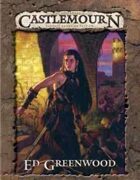
I respect a lot of what Ed Greenwood has done, but unfortunately I couldn't get into this product. A good campaign setting has to really grab you, and despite a few unique ideas around this relatively small land that's recovering from a magical apocalypse, the whole business never really feels authentic or put-together the way early Forgotten Realms did.
Of course, not being the Realms is no crime in campaign setting, but this product simply fails to grab the imagination or excite. Despite the different premise, it all feels terribly average. In a RPG market flooded with potential settings, this one just doesn't quite meet the standards to be memorable.
|
|
|
|
|
|
|
|
|
|
|


 Log In